Loading...
Serving Harlingen, TX and surrounding areas. (956) 506-1493
When the ground moves with every wet season and dry spell, what holds everything else in place is the footing underneath. We pour concrete footings in Harlingen that are built deep and wide enough for local clay soil, so porches, additions, and structures stay put year after year.
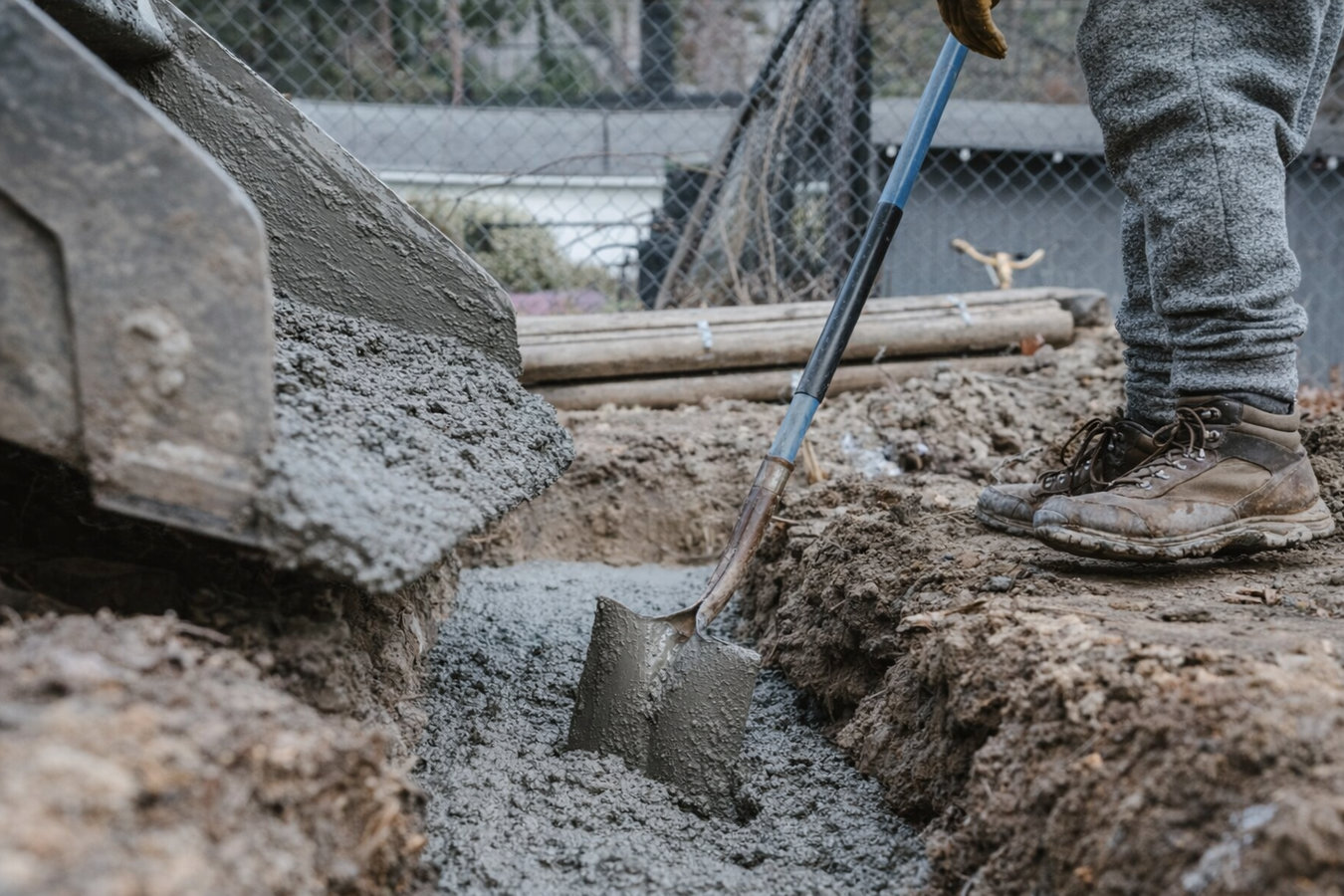
Concrete footings in Harlingen are the underground base that holds up a porch, room addition, garage, or detached structure - the crew digs to stable soil below the clay layer, compacts the trench bottom, sets forms, adds steel reinforcement where required, and pours after the city inspector signs off on the trench. Most residential footing jobs take one to three days from dig to pour, then one week of curing before framing can begin.
The reason footings matter so much in Harlingen is the soil. The heavy clay ground here swells when it rains and shrinks when it dries, and a footing that was not built deep enough or wide enough for that movement will let the structure above it crack, tilt, or pull away from the house - sometimes within just a few years of construction. This is especially common in older Harlingen neighborhoods where additions were built before contractors fully understood how to design for expansive clay.
For larger projects, footings are often the first step before we pour a full slab foundation or a foundation installation for a new structure. We handle both when the scope calls for it.
Cracks that run horizontally near the bottom of a wall, or diagonal cracks spreading from the corners of a doorframe, often point to footing movement below. In Harlingen's clay soil, this kind of cracking appears frequently after a long dry spell followed by heavy rain, when the ground has swelled and contracted repeatedly. It does not always mean disaster, but someone should look at it before it worsens.
If a porch column, fence post, or room addition looks even slightly tilted - or if you can see a gap opening between a structure and the main house - the footing underneath may have shifted. This is especially common in older Harlingen homes where additions were built before current standards required deeper footings for expansive soil. A leaning structure will not correct itself.
When a footing moves, the frame above it moves too, and that shows up as doors that drag on the floor or windows that no longer close square. If this happens after unusual weather - a long drought or a major storm - it is worth having a contractor check whether footings are involved. This symptom alone does not confirm a footing problem, but it is a signal worth investigating.
Any new structure attached to or near your Harlingen home needs its own properly designed footings before a single wall goes up. Skipping or undersizing them is one of the most common reasons additions crack and separate from the main house within a few years. If you are in the planning stage, this is exactly the right time to ask about footings.
We handle the complete process - permit application with the City of Harlingen, site assessment, utility locating, excavation, trench compaction, form setting, steel reinforcement where the project requires it, scheduling the required city inspection, and the concrete pour once the trench is cleared for work. We build strip footings for additions, spread footings for columns and posts, and combination footings for larger structures. Every footing is dug to stable soil depth, not just a standard number - the actual stable layer in Harlingen varies from yard to yard depending on fill history and drainage, and we check rather than assume.
Footings are often the first phase of a larger project. We regularly pour footings as part of a full foundation installation or ahead of a new slab foundation when the scope of the project calls for both. Scheduling them together keeps mobilization costs down and ensures the footing depth and the slab design are coordinated from the start.
Continuous footings running the perimeter of a new room or attached structure - the standard choice for expanding an existing Harlingen home.
Wider pad footings that spread the load of a single column, fence post, or carport support across enough soil area to stay stable through seasonal movement.
For property owners building a detached structure where the footings need to meet city code and handle South Texas soil conditions independently.
If you suspect an older porch, addition, or wall has failing footings, we can assess what is there and recommend whether repair or replacement makes more sense.
Harlingen sits on some of the most expansive clay soil in Texas. The ground swells noticeably when it absorbs rain and contracts and cracks when dry spells set in - and in the Rio Grande Valley, both happen every year. That soil movement is the single biggest reason structures crack and shift here more often than in parts of Texas with sandier ground. A footing designed for stable soil will fail in Harlingen within a few years if the crew did not account for this. We dig to the depth where the soil is genuinely stable, compact the trench bottom before pouring, and add rebar reinforcement when the project or soil conditions call for it. We work throughout the area, including with homeowners in San Benito and the surrounding Cameron County communities where identical soil conditions apply.
Harlingen also has a large share of homes built in the 1950s, 1960s, and 1970s - a time when footing standards in Texas were less stringent than they are today. If you are adding onto one of those homes, you cannot assume the existing footings will support new construction. We assess what is already there before recommending what is needed, which protects your investment in the addition itself. We serve homeowners across the region, including in McAllen and the broader Valley, where the same older housing stock and clay-soil challenges are common.
We respond within one business day. Tell us what you are building and roughly where - we will schedule a free on-site visit to look at the project and soil conditions before quoting anything.
We walk the site, check the soil, look at any existing structures nearby, and give you a written estimate that spells out scope, depth, and materials. No single-number bids that hide what you are actually paying for.
We handle the City of Harlingen permit application. Before any concrete is poured, a city inspector checks the trench and steel reinforcement - this inspection is required and protects you as the homeowner.
Once inspection is cleared, the crew pours and levels the footings. The area stays off-limits for at least a week while the concrete cures. We give you a specific ready date so your framer or builder can schedule their work.
No pressure. We visit the site, check the soil, and give you a written quote within one business day.
(956) 506-1493We pull the City of Harlingen permit and schedule the pre-pour inspection as a standard part of every footing project. The inspector checks the trench before concrete goes in - an independent set of eyes that protects you now and when you eventually sell the home.
The stable soil layer in Harlingen varies from yard to yard depending on fill history and drainage. We assess each site rather than defaulting to a fixed number, which means footings that actually reach stable ground instead of stopping in moving clay.
We have poured footings across Harlingen and the surrounding Valley communities - from San Benito to McAllen - so our crews know exactly what local clay soil requires. That regional track record means references from nearby jobs you can verify yourself.
Many Harlingen homes were built in the 1950s and 1960s when footing standards were much less demanding. Before connecting any new addition to an existing structure, we evaluate what is already there - protecting your investment from being built on a foundation that cannot support it.
A footing is buried the moment the pour is done. The decisions that determine whether it will hold up through decades of South Texas soil movement are all made before a truck arrives on site.
The Texas Department of Licensing and Regulation is the state resource for verifying contractor registration and insurance before hiring anyone for structural work.
When an existing foundation has settled unevenly, raising it back to level before the next storm season prevents the problem from compounding.
Learn more ->For larger projects where footings are the first step toward a full new foundation for a home, garage, or commercial structure.
Learn more ->Storm season puts stress on every structure in South Texas - get your project planned and permitted now before the ground gets unpredictable.